
Executive Summary
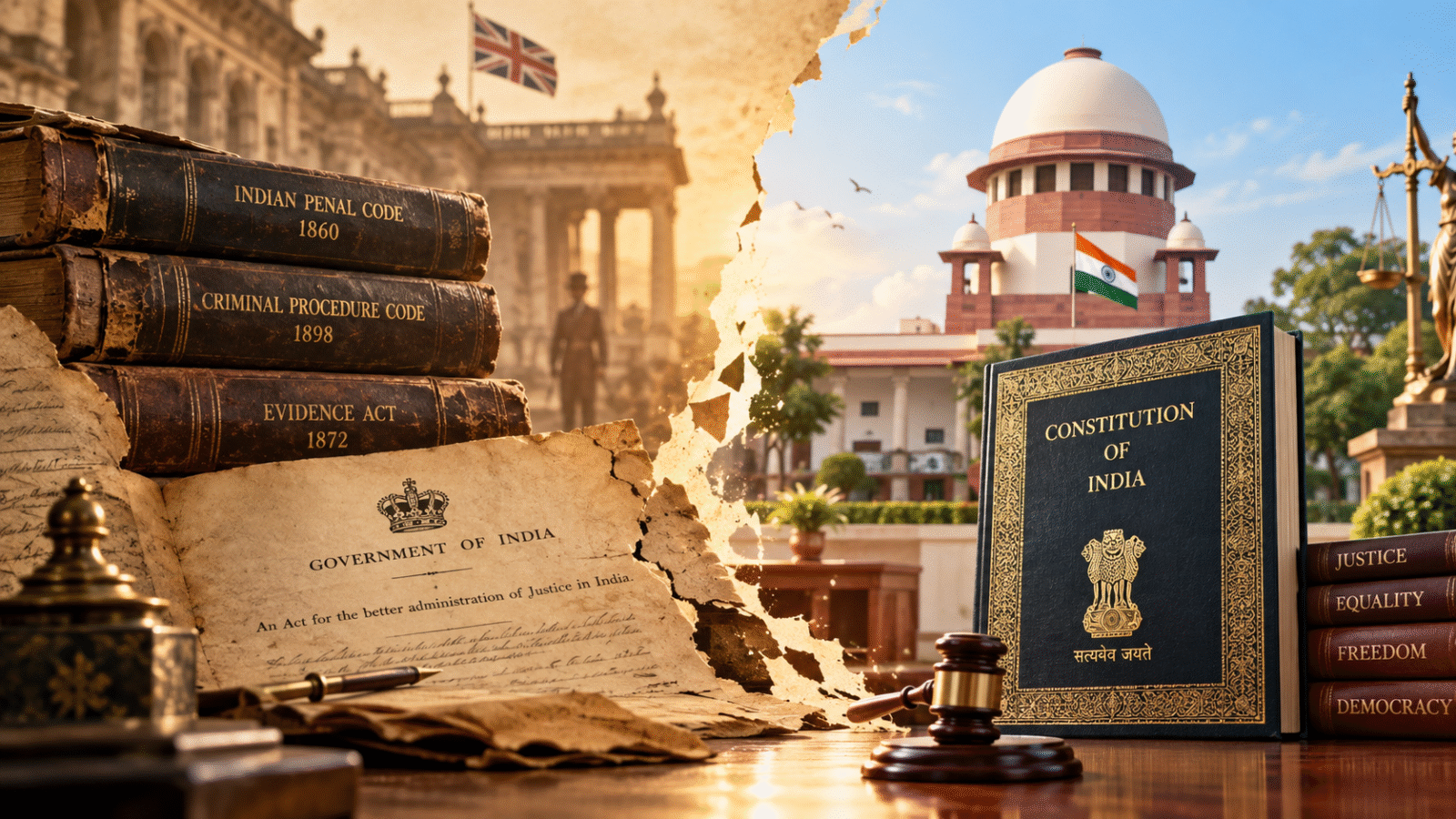
The Indian legal landscape presents a structural paradox: while the state has undertaken an unprecedented statutory housekeeping drive since 2014, repealing over 1,500 redundant Central enactments, numerous colonial-era statutes and obsolete regulatory frameworks remain active or selectively enforced on the ground1. The persistence of these laws stems from constitutional continuity clauses, federal divisions of legislative power, and administrative inertia. Acts such as the Sarais Act, 1867, the Indian Treasure Trove Act, 1878, and the Indian Aircraft Act, 1934, were engineered to serve nineteenth- and early twentieth-century colonial objectives, yet they continue to empower administrative authorities to exercise arbitrary discretion, collect economic rents, and harass citizens2.
Compounding this administrative drag is the “zombie law” phenomenon—wherein statutory provisions explicitly declared unconstitutional by the Supreme Court of India, such as Section 66A of the Information Technology Act, 2000, remain actively invoked by ground-level law enforcement due to structural communication breakdowns5. Concurrently, modern legislative attempts at decriminalization, notably through the Jan Vishwas (Amendment of Provisions) Act, 2023, reflect a fundamental shift toward trust-based governance, yet introduce complex trade-offs between corporate ease of doing business and public welfare oversight7. This report delivers a thorough legal analysis of obsolete laws currently enforced or selectively weaponized in India, evaluating their institutional mechanisms, federal constraints, judicial remedies, and the policy mandates required to decongest the statutory corpus.
Structural Foundations of Legislative Congestion and Enforcement Resilience
Article 372(1) and the Legal Continuity Imperative
The structural retention of colonial-era statutes in modern India is fundamentally rooted in Article 372(1) of the Constitution of India9. To prevent a legal vacuum upon gaining independence in 1947, the framers mandated that all laws in force in the territory of India immediately before the commencement of the Constitution would continue in operation until altered, repealed, or amended by a competent legislature9. While this constitutional provision ensured governance stability during the transition of power, it institutionalized thousands of British-era statutes designed primarily for imperial subjugation, revenue extraction, and social control9. These laws were preserved en masse without undergoing a substantive review regarding their alignment with democratic constitutional guarantees, leaving their eventual removal contingent on deliberate legislative intervention9.
The administrative mechanism for maintaining this statutory continuity relies on the doctrine of sovereign adoption9. By tacitly incorporating the legislative will of the prior colonial sovereign, the post-colonial Indian state preserved administrative continuity9. However, this institutional continuity created a massive statutory accumulation, as the fast-paced enactment of modern legislation rarely included provisions for the systematic repeal of corresponding colonial frameworks1. Consequently, historical enactments remain fully valid on the statute books unless explicitly targeted by a repealing act1.
The Inapplicability of the Doctrine of Desuetude in Indian Jurisprudence
In Western common law systems, the doctrine of desuetude posits that prolonged non-enforcement of a statute, coupled with a contrary settled social practice, renders the statute legally void and unenforceable by courts9. However, Indian legal jurisprudence has consistently rejected the automatic repeal of laws via desuetude9. The Supreme Court of India has established that pre-constitutional statutes saved under Article 372 remain fully operational regardless of how long they have laid dormant, provided they do not violate Part III (Fundamental Rights) of the Constitution9.
A clear illustration of this constitutional principle appears in State of Punjab v. Devans Modern Breweries Ltd. (2003), where the Supreme Court evaluated the post-constitutional validity of colonial-era excise regulations under the Punjab Excise Act, 191413. The Court reaffirmed that pre-constitutional statutes saved under Article 372(1) retain full statutory force until explicitly altered or repealed by a competent legislature9. The judiciary maintains that the power to retire or repeal a statute rests exclusively with the legislative branch, effectively declining to use desuetude as a tool for judicial nullification9. Consequently, even if a statutory provision has been ignored for decades, executive agencies retain the legal authority to revive and enforce it at will, leaving unsuspecting citizens vulnerable to sudden legal jeopardy11.
Seventh Schedule Federal Divisions and State Legislative Inertia
A primary hurdle in cleansing obsolete statutes from the legal system is the federal distribution of legislative powers established under the Seventh Schedule of the Constitution11. Central reform bodies, such as the Ramanujam Committee (2014) and the Law Commission of India, routinely identify obsolete laws that fall within List II (State List) or List III (Concurrent List)10. Under Article 372(1), a Central pre-constitutional enactment whose subject matter has devolved to the states under the Seventh Schedule can only be repealed or amended by individual State Legislatures11.
Out of the primary statutes identified for immediate repeal by national review committees, over 150 acts fall within the exclusive legislative competence of state assemblies11. While the Central Government can enact omnibus bills to repeal Central statutes listed on the India Code, state assemblies exhibit widespread legislative inertia11. This creates an asymmetric legal framework where an obsolete colonial law may be repealed in one state while remaining actively enforced in another, producing geographic disparities in statutory compliance and administrative burden11.
Empirical Analysis of Enforced Obsolete Statutes
The Sarais Act, 1867: Rent-Seeking in Hospitality Administration
The Sarais Act, 1867, was enacted by the British regime to regulate public inns (sarais) used by travellers traveling via horses, camels, and bullock carts across colonial India17. The statute imposes archaic operational requirements on innkeepers, including the mandatory registration of all establishments with the District Magistrate prior to housing lodgers, the statutory duty to furnish free drinking water and washroom access to any passerby at any time, the duty to remove noxious vegetation and trim tree branches capable of aiding thieves, and the obligation to immediately report any guest illness to local police stations17.
Although modern hotels, guest houses, and homestays are heavily regulated under state tourism policies, municipal corporation bye-laws, and state Shops and Establishments Acts, the Sarais Act remains operational across multiple state jurisdictions4. This statutory duplication allows local police officers, tourism officials, and municipal inspectors to conduct arbitrary inspections and threaten hotel owners with license cancellation or monetary fines4.
The operational persistence of this colonial framework is evident in executive enforcement orders issued across urban centers18. For instance, in August 2024, the Commissioner of Police in Guwahati issued a strict enforcement order under the Sarais Act, 1867, compelling all modern hotels, lodges, homestays, and private hostels in the city to register under the Act with the Office of the Commissioner of Police and submit daily overnight guest lists to local police stations under threat of immediate closure21. Similarly, commercial establishments in Delhi and municipal districts in Uttarakhand continue to face regulatory litigation and administrative harassment under the 1867 Act, demonstrating how a law designed for nineteenth-century shelter management is weaponized for police surveillance and administrative rent-seeking18.
The Indian Treasure Trove Act, 1878: Criminalizing Heritage and Archaeological Discoveries
Enacted during the British Raj to secure historical artifacts for the British Crown, the Indian Treasure Trove Act, 1878, defines “treasure” as anything of value hidden in the soil or attached to land, provided its monetary value exceeds ten rupees ()2. Under Section 4 of the Act, any person who finds such treasure is legally obligated to immediately submit a written notice to the District Collector specifying the precise nature, estimated value, and location of the discovery, while simultaneously depositing the physical item into the nearest government treasury or giving security for its production2.
Finder unearths object worth > ₹10
  │
  ├─► Formal Notice Submitted to District Collector
  │     │
  │     └─► Public Inquiry (4–6 Month Claim Window)
  │           │
  │           └─► State Acquisition at Material Value + 20% Compensation
  │
  └─► Failure to Report / Concealment
        │
        └─► Section 20 Prosecution: Up to 1 Year Imprisonment, Fine, and Forfeiture
Failure to comply with these statutory mandates triggers criminal prosecution under Section 20 of the Act, carrying penalties of up to one year of imprisonment, monetary fines, or both, alongside the complete forfeiture of the finder’s legal share2. Furthermore, Section 21 establishes that landowners who abet the concealment of a discovery face up to six months of imprisonment2.
Because the statutory threshold has remained unadjusted for over 140 years, virtually any modern underground object or historical artifact uncovered during routine activities triggers full statutory application3. The law operates penalizingly against construction workers, marginal farmers, and rural residents who unearth antique coins or structural remnants during field ploughing or building excavation24.
Under the Act’s acquisition framework, the government retains the unilateral right to expropriate discovered treasure by paying its intrinsic material value plus a premium, entirely detached from the object’s cultural, artistic, or historical market value2. This statutory structure disincentivizes voluntary reporting2. Fearing police harassment, property seizure, and prolonged litigation before Revenue Collectors, finders frequently destroy historical artifacts, melt down precious metals, or sell discoveries into illicit black markets, illustrating how an obsolete colonial law actively undermines heritage preservation2.
The Indian Aircraft Act, 1934: Regulatory Overreach in Civilian Pastimes
The Indian Aircraft Act, 1934, was framed to regulate civil aviation, airport safety, and aircraft manufacturing across British India27. However, the statutory definition of “aircraft” under Section 2 of the Act was framed so broadly that it encompasses any machine capable of deriving support in the atmosphere from air reactions, explicitly capturing non-motorized gliders, kites, and captive balloons3.
Under this statutory framing, the simple manufacture, possession, or flying of a recreational kite or toy balloon technically constitutes the operation of an unauthorized aircraft, requiring explicit permits from civil aviation authorities or local police departments3. While rarely enforced against children during festive occasions, police departments periodically invoke this statutory classification to issue local curfews, ban kite flying during political visits, and execute warrantless confiscations of kite-making materials27. The continued existence of this broad definition highlights how functional administrative laws retain unamended colonial provisions that turn routine civilian activities into technical offenses3.
The Habitual Offenders Framework: Colonial Surveillance of Denotified Tribes
In 1871, the colonial government enacted the Criminal Tribes Act, arbitrarily designating over 150 specific caste groups, nomadic communities, and indigenous tribes as inherently criminal29. Members of these “notified tribes” were subjected to compulsory registration, mandatory fingerprinting, movement restrictions, and warrantless arrests29. Following Independence, the Indian Parliament formally repealed the Criminal Tribes Act in 1952, reclassifying these marginalized populations as Vimukta Jatis or Denotified Tribes29.
However, the structural logic of the repealed statute was swiftly re-incorporated into state-level Habitual Offenders Acts passed across various states32. While these modern state statutes substitute hereditary caste designations with criteria based on repeat convictions, local police departments continue to maintain informal registers derived directly from colonial-era files29.
Members of Denotified Tribes remain disproportionately targeted for pre-emptive detention, mandatory check-ins at local police stations, and intrusive surveillance whenever property crimes occur within a district29. This framework demonstrates how the operational mechanics of an obsolete colonial statute can survive statutory repeal, persisting through state-level police regulations and institutionalized bias29.
The “Zombie Law” Phenomenon and Structural Enforcement Deficits
Section 66A of the Information Technology Act, 2000
Beyond obsolete statutes that remain formally unrepealed, the Indian legal system struggles with “zombie laws”—statutory provisions that have been explicitly declared unconstitutional and void ab initio by the Supreme Court of India, yet continue to be actively enforced by local police stations5.
The primary example of this institutional defect is Section 66A of the Information Technology Act, 2000, which criminalized sending “offensive” or “annoying” electronic communications37. In the landmark judgment Shreya Singhal v. Union of India (2015), the Supreme Court struck down Section 66A in its entirety, ruling that the provision violated the fundamental right to freedom of speech and expression under Article 19(1)(a) of the Constitution due to its vagueness and overbreadth6.
Despite this clear judicial nullification, an empirical study submitted to the Supreme Court by the NGO People’s Union for Civil Liberties (PUCL) in 2021 revealed that law enforcement agencies across multiple states had registered hundreds of fresh First Information Reports (FIRs) under Section 66A in the years following the Shreya Singhal ruling5. Trial courts routinely accepted charge sheets citing the void section, leading to unlawful arrests, bail hearings, and prolonged prosecutions under a dead law5.
Systemic Causes of Unconstitutional Law Enforcement
The operational survival of struck-down laws is driven by structural failures across state administration and legal information systems:
Manual Updating of Statutory Manuals: Local police stations frequently rely on physical copies of bare acts or outdated digital databases within the Crime and Criminal Tracking Network & Systems (CCTNS) that do not automatically purge struck-down provisions5.
Knowledge Asymmetry and Training Deficits: Lower-level investigating officers receive limited training regarding judicial updates, operating strictly on historic procedural templates and legacy police manuals36.
Subordinate Judicial Mechanical Processing: Judicial Magistrates, burdened by severe case backlogs, frequently process police charge sheets without scrutinizing whether cited statutory provisions remain legally valid5.
Institutional Incentives in Policing: Vague statutory provisions provide police officers with broad leverage during field interventions, incentivizing the retention of coercive legal tools despite judicial invalidation4.
Legislative Decongestion, Savings Clauses, and the Decriminalization Shift
Institutional Review Bodies and Periodic Repealing Acts
To address statutory congestion, successive Central Administrations have executed systematic legal housekeeping initiatives1. In September 2014, the Prime Minister’s Office established the Ramanujam Committee to conduct a comprehensive review of Central enactments10. The committee identified 1,741 Central Acts out of 2,781 in existence as candidates for repeal, concluding that roughly of the Central statute book was redundant or obsolete10.
Simultaneously, the 20th Law Commission of India, chaired by Justice A.P. Shah, submitted four interim reports (Report Nos. 248, 249, 250, and 251) under its “Legal Enactments: Simplifications and Streamlining” (LESS) project, recommending 258 specific archaic statutes for immediate repeal11. These institutional findings led to periodic omnibus repealing statutes10:
Repealing and Amending Acts (2015–2019): The Parliament repealed over 1,428 obsolete Central statutes between 2014 and 201941.
Repealing and Amending Act, 2019: Formally repealed 58 outdated statutes and made targeted corrections to core enactments like the Income-tax Act, 196110.
Repealing and Amending Act, 2025: Cleared 71 obsolete enactments passed between 1886 and 2023, while refining foundational laws including the General Clauses Act, 1897, and the Code of Civil Procedure, 19081.
Mechanics of Legal Continuity: The Savings Clause
A critical structural component of periodic repealing legislation is the inclusion of a robust Savings Clause1. When Parliament repeals dozens of obsolete statutes simultaneously, there is a risk of inadvertently invalidating historical land titles, appointments, or past legal decisions made under those acts1.
The Savings Clause mitigates this risk by establishing that the abrogation of a statute does not affect any right, privilege, obligation, or liability acquired, accrued, or incurred under the repealed law prior to its removal1. It ensures that past legal processes remain fully valid and prevents the unintentional revival of custom, privilege, or jurisdiction that was not previously in force1. This legislative technique allows the state to clean the statute books while preserving institutional stability and legal continuity1.
The Jan Vishwas Framework: Trust-Based Governance vs. Regulatory Oversight
To transition from a punitive regulatory model to a trust-based governance system, Parliament enacted the Jan Vishwas (Amendment of Provisions) Act, 2023, which came into full operational effect across key commercial sectors in August 20247. The legislation amended 42 Central Acts across 19 Union Ministries, decriminalizing 183 statutory provisions7.
The Jan Vishwas Act replaced custodial imprisonment with civil financial penalties across technical, procedural, and representational offenses in laws such as the Patents Act, 1970, the Trade Marks Act, 1999, the Copyright Act, 1957, and the Geographical Indications of Goods Act, 19997. The Act also introduced an administrative adjudication structure, empowering departmental Adjudicating Officers to hear disputes and levy fines, bypassing clogged criminal courts7. To prevent the financial deterrence of civil penalties from eroding over time, Section 3 of the Act mandates an automatic increase in the minimum amounts of all prescribed fines and penalties every three years47.
Despite these operational benefits for commercial enterprises, public policy analysts and health advocates have raised serious concerns regarding specific decriminalization provisions in the Jan Vishwas Act8:
Drugs and Cosmetics Act, 1940: The Act amended Section 27(d), converting the manufacture and sale of “Not of Standard Quality” (NSQ) pharmaceuticals into a compoundable offense8. First-time offenders who manufacture substandard drugs lacking adequate active ingredients can now avoid minimum custodial prison terms by paying a civil fine of , introducing public health risks8.
Indian Post Office Act, 1898: The Act deleted Chapter X in its entirety, decriminalizing offenses committed by postal officers, including the theft, misappropriation, or unauthorized opening of mail bags and postal articles8.
Agricultural Produce (Grading and Marking) Act, 1937: Provisions criminalizing the unauthorized use or counterfeiting of official quality grade marks were converted from prison terms to flat financial penalties, which critics argue weakens consumer protection standards8.
Statutory Synthesis and Regulatory Status
| Statute / Provision | Year Enacted | Historical Objective | Contemporary Enforcement & Conflict | Legislative & Judicial Status |
|---|---|---|---|---|
| The Sarais Act | 1867 | Regulate public inns and shelters for horse and bullock-cart travellers18. | Invoked by police against modern hotels and homestays for guest list submissions and free washroom access4. | Law Commission Report 248 recommended repeal; pending state-level action15. |
| Indian Treasure Trove Act | 1878 | Secure underground treasure exceeding for the British Crown2. | Criminalizes finders under Section 20; disincentivizes reporting and drives artifacts into black markets2. | Central repeal recommended; state amendments vary across jurisdictions2. |
| Indian Aircraft Act | 1934 | Regulate civil aviation infrastructure and flight safety27. | Categorizes recreational kites and balloons as “aircraft,” requiring police flight permits3. | Aviation statute retained; statutory definitions remain unamended24. |
| Habitual Offenders Acts | 1952 | State-level legal replacements for the Criminal Tribes Act, 187132. | Enables arbitrary police surveillance and pre-emptive detention of Vimukta Jatis29. | Operative under state police frameworks; criticized by human rights bodies29. |
| Section 66A, IT Act | 2000 | Penalize sending offensive electronic messages38. | Struck down in 2015 (Shreya Singhal); improperly invoked in police FIRs due to system lags5. | Declared unconstitutional; Supreme Court monitoring cleanup5. |
| Section 27(d), Drugs & Cosmetics Act | 1940 | Penalize manufacture and distribution of substandard (NSQ) drugs8. | Imprisonment replaced with compoundable fine under Jan Vishwas Act, 20238. | Decriminalized; operates under modified civil fine framework8. |
| Chapter X, Post Office Act | 1898 | Criminalize theft, destruction, or mail opening by postal officials8. | Deleted entirely by Jan Vishwas Act, 2023; removes custodial deterrence8. | Omitted via Jan Vishwas Act, 20238. |
Systemic Insights, Policy Implications, and Recommendations
Asymmetric Discretion and Selective Rent-Seeking
The persistence of obsolete laws creates a structural power asymmetry between the state and the populace28. Outdated statutory provisions are rarely enforced uniformly; instead, they lie dormant until invoked selectively by local law enforcement officers, municipal inspectors, or private litigants seeking leverage4.
Because the average citizen or business operator is unaware of obscure nineteenth-century mandates, local administrative authorities exercise broad discretionary power4. This operational reality transforms obsolete statutes into instruments for rent-seeking, extortion, and procedural harassment, disproportionately affecting small businesses, marginal workers, and vulnerable social groups4.
Public Health and Safety Trade-Offs
The trajectory of statutory rationalization—exemplified by the Jan Vishwas Act, 2023—demonstrates a clear policy priority toward improving commercial productivity and reducing judicial backlog7. However, broad decriminalization drives introduce public welfare risks when applied indiscriminately to public health and safety regulations8.
Converting criminal sentences into compoundable monetary fines for substandard drug manufacturing or food safety violations shifts corporate risk calculations: large industrial enterprises may come to treat civil fines as routine cost-of-doing-business expenses rather than effective deterrents7. True legal reform requires a clear distinction between administrative errors (such as delayed form filings) and substantive public safety hazards8.
Strategic Reform Imperatives
To resolve the structural friction caused by obsolete statutes and unconstitutional provisions, the Indian legal system requires targeted structural interventions:
Mandatory Automatic Sunset Clauses: All future regulatory enactments should feature statutory sunset clauses (e.g., 10 to 15 years) mandating periodic parliamentary re-authorization, preventing future statutory accumulation12.
Automated Integration of Judicial-Executive Portals: To eliminate “zombie laws,” the Ministry of Home Affairs must integrate Supreme Court and High Court legal databases directly into state police CCTNS platforms, automatically blocking the registration of FIRs under struck-down statutory provisions5.
Establishment of Permanent State Law Revision Commissions: State Assemblies should establish permanent statutory review commissions tasked with reviewing List II statutes and enacting annual omnibus Repealing Bills to address state-level legislative inertia11.
Recalibration of Heritage and Discovery Incentives: The Indian Treasure Trove Act, 1878, should be replaced with modern heritage legislation that guarantees finders fair market valuation for archaeological discoveries, converting private citizens into active stewards of national heritage2.
Conclusions
India’s legislative clean-up efforts have achieved significant progress, clearing over 1,500 obsolete Central statutes from the statute books since 20141. However, the continued presence of colonial-era laws like the Sarais Act, 1867, and the Indian Treasure Trove Act, 1878, alongside the persistent enforcement of unconstitutional “zombie laws” like Section 66A of the IT Act, highlights deep-seated operational deficits in police administration and state-level governance2.
Because Indian jurisprudence rejects the automatic invalidation of statutes through desuetude, statutory deadwood remains an active administrative weapon unless explicitly repealed by competent legislatures9. Overcoming these challenges requires institutionalizing automatic sunset clauses, automating digital compliance linkages between judicial rulings and local police systems, and extending statutory clean-up drives from the Central Parliament down to State Assemblies5. Only through comprehensive legal modernization can India bridge the gap between high-level legislative rationalization and ground-level legal reality.
Works cited
The Repealing and Amending Act, 2025 – PIB, https://www.pib.gov.in/FactsheetDetails.aspx?Id=150601®=%203&lang=1
Indian Treasure Trove Act 1878, Provisions, State Amendments, https://vajiramandravi.com/current-affairs/indian-treasure-trove-act-1878/
Archaic Indian Laws You Probably Never Knew Existed, https://homegrown.co.in/homegrown-explore/archaic-indian-laws-you-probably-never-knew-existed
Obsolete and redundant – Governance Now, https://www.governancenow.com/news/regular-story/obsolete-and-redundant
Section 66A: The Zombie on a Hunt | by Samriddhi | CivicDataLab, https://medium.com/civicdatalab/section-66a-the-zombie-on-a-hunt-2a96a68ca54d
Peoples Union For Civil Liberties vs Union Of India on 12 October, https://indiankanoon.org/doc/173319912/
Decriminalization of IP – Jan Vishwas Act, 2023 – Aarna Law, https://www.aarnalaw.com/insights/decriminalization-of-ip-jan-vishwas-act-2023
Jan Vishwas Act, 2023: Symbol of a Broken Legislative Process, https://www.theindiaforum.in/public-policy/jan-vishwas-act-2023-symbol-broken-legislative-process
Doctrine of Desuetude –Addressing the Constitutional Minefield, https://journals.christuniversity.in/index.php/culj/article/download/616/463/1156
Repealing of laws : need of the hour – iPleaders, https://blog.ipleaders.in/repealing-of-laws-need-of-the-hour/
Removing Deadwood from the Law Books | Current Affairs, https://www.shankariasparliament.com/current-affairs/removing-deadwood-from-the-law-books
Dynamics and Dimensions of Doctrine of Desuetude – EBC, https://ebc-india.com/lawyer/articles/2004v4a2.htm
STATE OF PUNJAB Versus DEVANS MODERN BREWERIES, https://lawsuitcasefinder.com/casedetail?id=U2FsdGVkX1ebh78tpYU8qMmlJLwUbynni9nplo2X0tI2dTtc1UMgs5
State of Punjab and Anr. Vs. M/S. Devans Modern Breweries and, https://www.caseon.in/case/state-of-punjab-and-anr-vs-ms-devans-modern-breweries-and-anr-etc
Report No. 250 On Obsolete Laws – Warranting Immediate Repeal, https://indiankanoon.org/doc/167477050/
Repealing Obsolete Laws in Maharashtra: Part II Post, https://vidhilegalpolicy.in/research/repealing-obsolete-laws-in-maharashtra-part-ii-post-independence-laws-1947-1960/
Indian Sarais Act 1867 Overview | PDF | Government – Scribd, https://www.scribd.com/document/286103506/Sarais-Act-1867
The Lessor Known Legislation: Indian Sarais Act, 1887, https://thecolumnofcurae.wordpress.com/2020/08/05/the-lessor-known-legislation-indian-sarais-act-1887/
sarais+act | Indian Case Law – CaseMine, https://www.casemine.com/search/in/sarais%2Bact
Query regarding any Indian law or act that let people use toilets of a, https://www.reddit.com/r/LegalAdviceIndia/comments/1jwfu34/query_regarding_any_indian_law_or_act_that_let/
Guwahati Police Enforces Sarais Act for Hotels and Lodges, https://theguwahati.com/guwahati-police-enforces-sarais-act-for-hotels-and-lodges/
Indian Treasure Trove Act, 1878 (ACT NO. VI OF 1878) (12th, http://www.myanmar-law-library.org/IMG/pdf/indian_treasure_trove_act_1878.pdf
Indian Treasure Trove Act, 1878, India-legitquest, https://www.legitquest.com/act/indian-treasure-trove-act-1878/2C04
Review: Here are a few archaic laws that are irrelevant in today’s times, https://factly.in/review-here-are-a-few-archaic-laws-that-irrelevant-in-todays-times/
Treasure trove of medieval gold and silver coins seized from, https://www.newindianexpress.com/india/2025/May/15/treasure-trove-of-medieval-gold-and-silver-coins-seized-from-labourers-at-construction-site-in-mp
Indian Treasure Trove Act, Provisions, Penalties & Government, https://testbook.com/ias-preparation/indian-treasure-trove-act
20 Ridiculous Indian laws that should be changed – Naukri Nama, https://naukrinama.com/general-knowledge-questions/basic-gk-questions/20-ridiculous-indian-laws-that-should-be-changed/c79965-w3082-cid783344-su7199.htm
India Wields the Axe on Her Majesty’s ‘Laughable’ Laws, https://www.newindianexpress.com/india/2014/Oct/07/india-wields-the-axe-on-her-majestys-laughable-laws-669083.html
Vimukta communities and Police – Daksh, https://www.dakshindia.org/vimukta-communities-and-police/
Criminal Tribes Act, 1871 – UnderStand UPSC, https://www.understandupsc.com/criminal-tribes-act-1871/
Denotified Tribes in India: A Sociological Study, https://rjhssonline.com/HTML_Papers/Research%20Journal%20of%20Humanities%20and%20Social%20Sciences__PID__2020-11-4-7.html
Criminalising Tribes (Pt. 1): Pre-colonial and Colonial Times – SPRF, https://sprf.in/criminalising-tribes-pt-1-pre-colonial-and-colonial-times/
Criminal Tribes To Habitual Offenders: Historical Roots Of Legal, https://www.ijllr.com/post/criminal-tribes-to-habitual-offenders-historical-roots-of-legal-framework-in-india
Everyday policing is casteist – IDR, https://idronline.org/article/social-justice/everyday-policing-is-casteist/
than 70 years from liberation, former “Criminal Tribes†continue, https://www.actionaidindia.org/more-than-70-years-from-liberation-former-criminal-tribes-continue-to-endure-stigma-and-discrimination/
Of 2018 IN WRIT PETITION (CRIMINAL) NO. 199 OF 2013 IN, https://images.assettype.com/barandbench/import/2019/01/PUCL-Section-66A-petition.pdf
Section 66A: The Dead Law That Still Haunts India, https://www.scobserver.in/journal/section-66a-the-dead-law-that-still-haunts-india/
Dreaded Section 66A of IT Act: Supreme Court Issues Notice to Centre, https://www.newsclick.in/dreaded-section-66a-it-act-supreme-court-issues-notice-centre
Shreya Singhal v. Union of India – Wikipedia, https://en.wikipedia.org/wiki/Shreya_Singhal_v._Union_of_India
66A – Zombie Tracker, https://zombietracker.in/recommendations/66a/
INDIA IN A DIRE NEED TO REPEAL/AMEND ITS ARCHAIC LAWS, https://doi-ds.org/doilink/05.2022-86219728/IJLLR/V4/I2/A112
Discussion of the Repealing and Amending (Fourth) Bill, 2015, https://indiankanoon.org/doc/31003262/
Old is Not Always Gold – A Case Study on Repealing Old Statutes, https://www.niti.gov.in/hi/node/479
Obsolete Laws – Law Commission of India, https://lawcommissionofindia.nic.in/cat_obsolete_laws/
Repealing and Amending Act, 2019 – Wikipedia, https://en.wikipedia.org/wiki/Repealing_and_Amending_Act,_2019
Jan Vishwas Act 2023: IP Law Decriminalisation in India Explained, https://selvams.com/insights/analysis-of-jan-vishwas-amendment-of-provisions-act-2023-an-ipr-perspective/
THE JAN VISHWAS (AMENDMENT OF PROVISIONS) ACT, 2023, https://egazette.gov.in/WriteReadData/2023/248047.pdf
JAN VISHWAS ACT: TRANSITION FROM PUNITIVE REGIME TO, https://ceerapub.nls.ac.in/jan-vishwas-act-transition-from-punitive-regime-to-trust-based-regime/
Analysis of the Jan Vishwas (Amendment of Provisions) Act, 2023, https://www.ahlawatassociates.com/blog/analysis-of-the-jan-vishwas-amendment-of-provisions-act-2023
The Jan Vishwas (Amendment of Provisions) Bill, 2026, https://prsindia.org/billtrack/the-jan-vishwas-amendment-of-provisions-bill-2026
Jan Vishwas (Amendment of Provisions) Act, 2023 decriminalized, https://www.pib.gov.in/PressReleasePage.aspx?PRID=2204206