
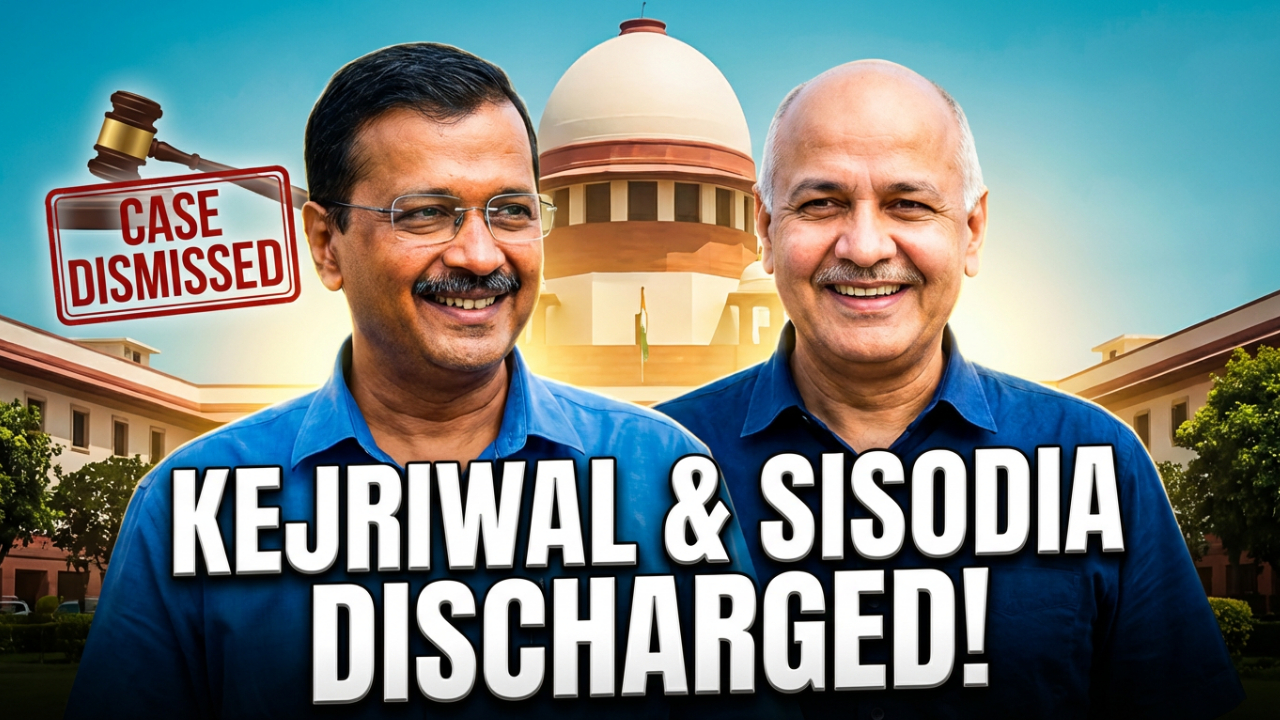
A sitting Chief Minister arrested, the top brass of a political party behind bars, and a legal battle that has gripped the nation with no end in sight. The Delhi liquor policy case continues to be a relentless political and legal firestorm, ensnaring Chief Minister Arvind Kejriwal, former Deputy CM Manish Sisodia, and several others in a web of allegations.
So, how did a case that was supposed to clean up Delhi’s liquor trade become one of the biggest political controversies in recent history? And is it a genuine crusade against corruption or a political vendetta designed to cripple an opposition party? Today, we’re breaking down the complex arguments from both sides and exploring what this unending legal war really means.
The Story So Far – How Did We Get Here?
To understand this stalemate, we have to rewind. It all started with a new liquor policy in 2021 designed to modernize Delhi’s liquor trade by privatizing retail. But it quickly blew up. In July 2022, Delhi’s Chief Secretary alleged procedural lapses and undue benefits to license holders, leading the Lieutenant Governor to recommend a CBI probe.
The CBI filed its case in August 2022, eventually naming then-Deputy CM Manish Sisodia as a key accused. The core allegation was a conspiracy: a “South Group” of politicians and businessmen allegedly paid 100 crore rupees in kickbacks to AAP leaders. In return, agencies claimed the policy was manipulated to give these players a massive 12% profit margin.
The AAP government scrapped the policy, but the investigation steamrolled ahead, becoming a full-blown political war. A series of high-profile arrests followed, starting with Manish Sisodia in February 2023, who has been in jail since. The saga peaked in March 2024 when the Enforcement Directorate arrested sitting Chief Minister Arvind Kejriwal after he skipped multiple summonses. Throughout it all, the AAP has maintained the case is a political vendetta, insisting on their innocence.
The Legal Quagmire – Prosecution vs. Defense
With no final verdict, the case is currently a fierce tug-of-war in the courts, centered on a few key arguments. So why is there a deadlock?
First, the prosecution’s case, led by the CBI and ED, hinges heavily on the testimony of approvers—accused individuals who have turned state witnesses. The agencies allege a clear quid pro quo, where policy changes were exchanged for kickbacks that were then funneled into AAP’s election campaigns. They have repeatedly argued in court that they have substantial material to frame charges against all the accused.
Second, the defense has systematically attacked these claims. AAP’s lawyers argue there has been no actual recovery of the alleged 100 crore bribe, calling the case a house of cards built on the words of unreliable witnesses trying to save themselves. They contend the policy was formulated through the proper government process, and that criticism of a policy doesn’t make it a crime. Kejriwal’s lawyers have argued there is no incriminating material directly linking him to the alleged conspiracy.
Third, the major legal hurdle for the accused has been getting bail. The stringent conditions under the Prevention of Money Laundering Act (PMLA), which places the burden of proof on the accused, have made release difficult. This has resulted in top leaders being incarcerated for long periods without a trial even beginning, a point the defense has repeatedly called an unjust deprivation of liberty.
The Political Battlefield & What’s Next
The ongoing case has sent a tidal wave through the political landscape. For the Aam Aadmi Party, the arrests have become their primary political narrative. They frame it as a clear example of “vendetta politics,” using it to rally their base and position themselves as victims of an overreaching central government. This has allowed them to run the Delhi government with its leaders in jail, a situation unprecedented in Indian politics.
For the opposition, the case serves as a powerful symbol of what they call the misuse of central agencies to target political rivals.
But the legal rollercoaster is far from over. The battle for bail continues in higher courts, and the trial itself has not yet formally begun. The next crucial phase will be the framing of charges, where the court will decide if there’s enough prima facie evidence to proceed with a full trial. This process could drag on for months, if not years, ensuring the shadow of this case will loom large over Delhi’s politics for the foreseeable future.
Conclusion
This is an extraordinary and unresolved chapter in Indian politics. A major corruption case has led to the jailing of a serving Chief Minister and his top aides, yet it remains stuck in a legal quagmire before the trial has even started. The saga has moved beyond just a legal question and has become a battle over institutional credibility and political narratives.
The case drives home a fundamental question: where is the line between a legitimate investigation and a political witch-hunt? With both sides digging in, the final chapter has yet to be written, and its conclusion will have profound implications for the relationship between law and politics in India.
What do you think? Is this a necessary cleanup of corruption or a politically motivated attack? Let us know in the comments.